




Austin Healey
Austin-Healey was a British sports car maker established in 1952 through a joint venture between the Austin division of the British Motor Corporation and the Donald Healey Motor Company, a renowned automotive engineering and design firm. BMC merged with Jaguar Cars in 1966 to form British Motor Holdings. Donald Healey left BMH in 1968 when it merged into British Leyland. Healey then joined Jensen Motors, which had been making bodies for the "Big Healeys" since their inception in 1952, and became their chairman in 1972. Austin-Healey cars were produced until 1972 when the 20-year agreement between Healey and Austin came to an end. The Austin Healey was extensively raced by the Donald Healey Motor Company in Europe at Le Mans and at Sebring in the U.S., in classic rallies by the BMC competitions department, and was recognized from the very beginning by the Sports Car Club of America (SCCA). Healey models raced in club racing, winning National Championships in all five classes.The last Big Healey to win an SCCA National Championship was the class E Production Austin-Healey 100-6 driven by Alan Barker at the Daytona ARRC in 1965. The Austin-Healey 100 was built from 1953 until 1956. Based on Austin A90 Atlantic mechanicals, it was developed by Donald Healey from his Nash-Healey 2 door sports car. Healey had Tickford build a single Healey Hundred for the 1952 London Motor Show, and the design impressed Leonard Lord, managing director of Austin, who was looking for a replacement for the unsuccessful A90.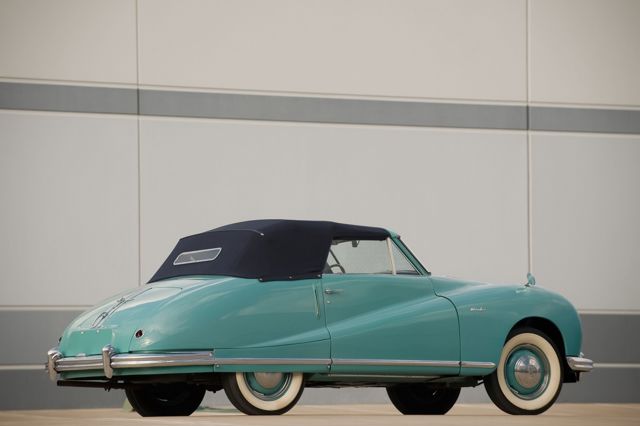 Austin A90
Lord struck a deal with Healey to build it in quantity; bodies made by Jensen Motors were given Austin mechanical components at Austin's Longbridge plant. The car was renamed the Austin-Healey 100.
The "100" was named by Healey for the car's ability to reach 100 mph (160 km/h); its successor, the better known Austin-Healey 3000, was named for the almost 3000 cc displacement of its engine.
Apart from the first twenty cars, production Austin-Healey 100s were finished at Austin's Longbridge plant alongside the A90. A total of 14,634 Austin-Healey 100s were produced.
The 100 was the first of three models later called the Big Healeys to distinguish them from the much smaller Austin-Healey Sprite.
Austin A90
Lord struck a deal with Healey to build it in quantity; bodies made by Jensen Motors were given Austin mechanical components at Austin's Longbridge plant. The car was renamed the Austin-Healey 100.
The "100" was named by Healey for the car's ability to reach 100 mph (160 km/h); its successor, the better known Austin-Healey 3000, was named for the almost 3000 cc displacement of its engine.
Apart from the first twenty cars, production Austin-Healey 100s were finished at Austin's Longbridge plant alongside the A90. A total of 14,634 Austin-Healey 100s were produced.
The 100 was the first of three models later called the Big Healeys to distinguish them from the much smaller Austin-Healey Sprite.
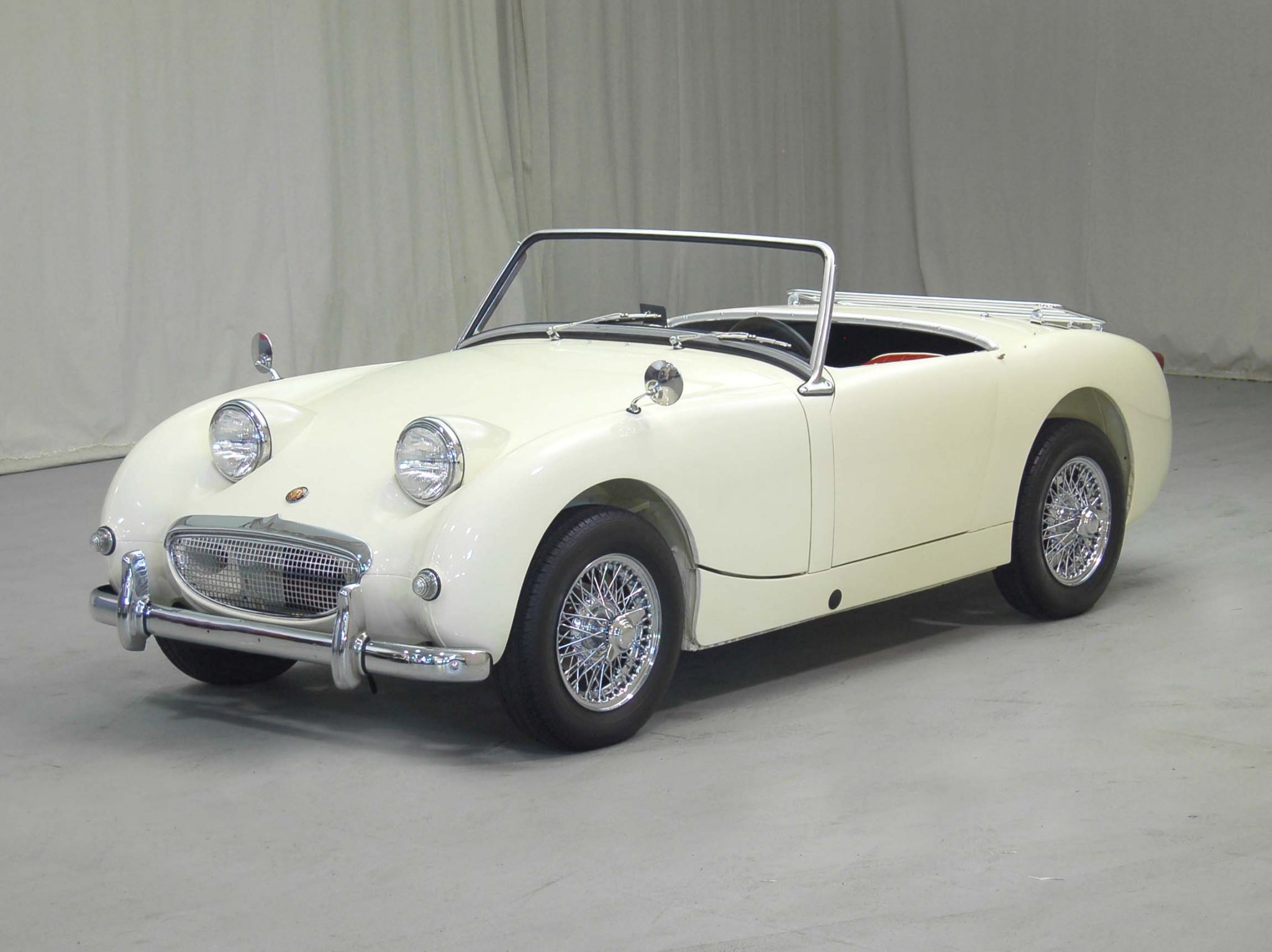 Sprite
The Austin-Healey 100-6 was produced from 1956 until 1959. A replacement for the Austin-Healey 100, it was followed by the Austin-Healey 3000; together, the three models have become known as the Big Healeys.
The 100-6 featured a 2 in longer wheelbase than the 100, a more powerful straight-six engine in place of its slightly larger inline-four, and had two small rear seats (which later became optional). The body lines were slightly streamlined, a smaller, wider radiator grille placed lower, an air scoop was added to the bonnet, and the windscreen was now fixed in place.
The 100-6 was produced in two model designators, the 2+2 BN4 from 1956 onwards and the 2-seat BN6 was produced in 1958 and 1959.
The Austin-Healey 3000 was introduced in July 1959 with a 3-litre BMC C-Series engine to replace the smaller 2.6-litre engine of the 100-6 and now had disc brakes on the front wheels. The manufacturer claimed it would reach 60 mph in 11 seconds and 100 mph in 31 seconds. It was built from 1959 to 1961. In 1961 the 3000 MKII was introduced, the engines were now fitted with three SU HS4 carburetors and an improved camshaft. Other changes included a vertical barred front grille. Optional extras were similar to the Mark I. From August 1961 a brake servo was also available as an optional extra, which greatly improved braking performance. These were the last true Big Healey roadsters; the BN7 Mark II was discontinued in March 1962, and the BT7 Mark II in June 1962.
Pininfarina exhibited the 3000 as a closed roof grand tourer, designed by Pio Manzù, at the October 1962 Earls Court Show. It was the winning design from a competition by Swiss motoring publication Auto-Jahr.
Sprite
The Austin-Healey 100-6 was produced from 1956 until 1959. A replacement for the Austin-Healey 100, it was followed by the Austin-Healey 3000; together, the three models have become known as the Big Healeys.
The 100-6 featured a 2 in longer wheelbase than the 100, a more powerful straight-six engine in place of its slightly larger inline-four, and had two small rear seats (which later became optional). The body lines were slightly streamlined, a smaller, wider radiator grille placed lower, an air scoop was added to the bonnet, and the windscreen was now fixed in place.
The 100-6 was produced in two model designators, the 2+2 BN4 from 1956 onwards and the 2-seat BN6 was produced in 1958 and 1959.
The Austin-Healey 3000 was introduced in July 1959 with a 3-litre BMC C-Series engine to replace the smaller 2.6-litre engine of the 100-6 and now had disc brakes on the front wheels. The manufacturer claimed it would reach 60 mph in 11 seconds and 100 mph in 31 seconds. It was built from 1959 to 1961. In 1961 the 3000 MKII was introduced, the engines were now fitted with three SU HS4 carburetors and an improved camshaft. Other changes included a vertical barred front grille. Optional extras were similar to the Mark I. From August 1961 a brake servo was also available as an optional extra, which greatly improved braking performance. These were the last true Big Healey roadsters; the BN7 Mark II was discontinued in March 1962, and the BT7 Mark II in June 1962.
Pininfarina exhibited the 3000 as a closed roof grand tourer, designed by Pio Manzù, at the October 1962 Earls Court Show. It was the winning design from a competition by Swiss motoring publication Auto-Jahr.
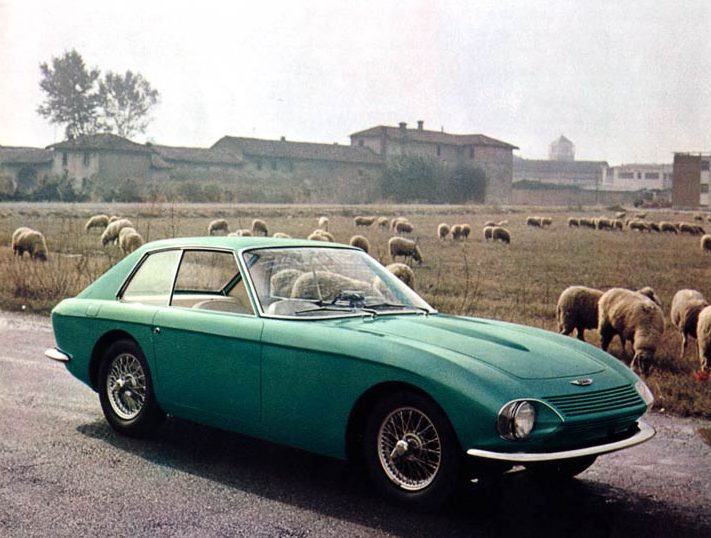 Pininfarina Healey
The 3000 sports convertible Mark III was announced in February 1964 with power increased from 136 bhp to 150 bhp by a new higher lift camshaft. SU HD8 carburetors replaced HS6 units. Power assisted braking became standard instead of optional. The new car's fascia displayed its speedometer and tachometer directly in front of the driver. The Mark III BJ8 remained in production until the end of 1967 when manufacture of the Austin-Healey 3000 ceased. 17,712 Mark IIIs were manufactured.
When production of the Austin-Healey 3000 ended, Donald Healey opened discussions with Jensen Motors, who had built the bodies for Healey's Austin-Healey cars. The largest Austin-Healey dealer in the U.S., San Francisco-based Kjell Qvale, was also keen to find a replacement to the Austin-Healey 3000; Qvale would become a major shareholder of Jensen, making Donald Healey the chairman. The Jensen-Healey was developed in a joint venture by Donald Healey, his son Geoffrey, and Jensen Motors. Jensen used Colin Chapman’s new 1973 cc Lotus 907 dual overhead cam, 16-valve all-alloy engine. This multi-valve engine was the first modern dual overhead cam 4 valve per cylinder engine to be mass-produced on an assembly line. This setup put out approximately 144 bhp, topping out at 119 mph (192 km/h) and accelerating from zero to 60 mph in 7.8 seconds.
The oil crisis hit Jensen Motors hard, greatly damaging the sales of its very large V8 Interceptor model and thus degrading its financial condition as a whole. The Jensen GT was then hurriedly brought to market, requiring massive labor expense and taxing the firm's budget even further. By 1974 Lotus was able to supply the required number of engines and production reached 86 cars a week but despite this the end was near
Pininfarina Healey
The 3000 sports convertible Mark III was announced in February 1964 with power increased from 136 bhp to 150 bhp by a new higher lift camshaft. SU HD8 carburetors replaced HS6 units. Power assisted braking became standard instead of optional. The new car's fascia displayed its speedometer and tachometer directly in front of the driver. The Mark III BJ8 remained in production until the end of 1967 when manufacture of the Austin-Healey 3000 ceased. 17,712 Mark IIIs were manufactured.
When production of the Austin-Healey 3000 ended, Donald Healey opened discussions with Jensen Motors, who had built the bodies for Healey's Austin-Healey cars. The largest Austin-Healey dealer in the U.S., San Francisco-based Kjell Qvale, was also keen to find a replacement to the Austin-Healey 3000; Qvale would become a major shareholder of Jensen, making Donald Healey the chairman. The Jensen-Healey was developed in a joint venture by Donald Healey, his son Geoffrey, and Jensen Motors. Jensen used Colin Chapman’s new 1973 cc Lotus 907 dual overhead cam, 16-valve all-alloy engine. This multi-valve engine was the first modern dual overhead cam 4 valve per cylinder engine to be mass-produced on an assembly line. This setup put out approximately 144 bhp, topping out at 119 mph (192 km/h) and accelerating from zero to 60 mph in 7.8 seconds.
The oil crisis hit Jensen Motors hard, greatly damaging the sales of its very large V8 Interceptor model and thus degrading its financial condition as a whole. The Jensen GT was then hurriedly brought to market, requiring massive labor expense and taxing the firm's budget even further. By 1974 Lotus was able to supply the required number of engines and production reached 86 cars a week but despite this the end was near
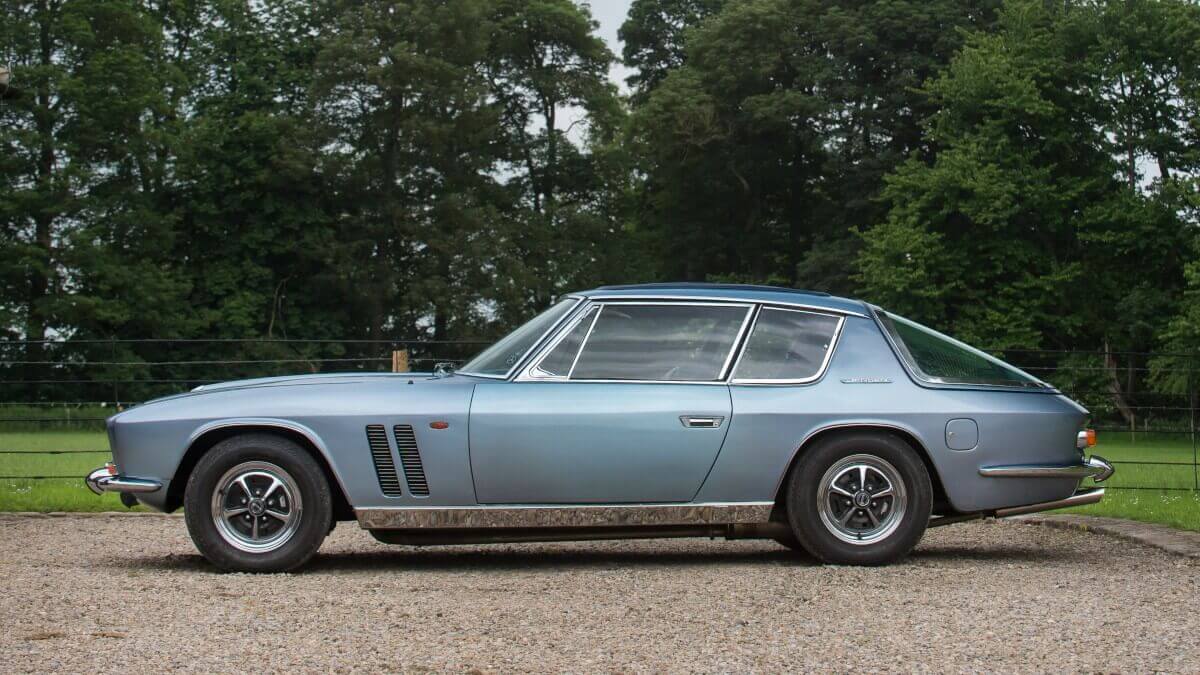 Jensen Interceptor
In 1975 the Jensen GT was introduced as the shooting-brake version of the Jensen-Healey. The new configuration was a 2+2 design with a very limited back seat. Aside from the body shape and seating, relatively little differed from the roadster. Acceleration and top speed were slightly reduced due to the increased weight and additional smog control components on the engine
Jensen Interceptor
In 1975 the Jensen GT was introduced as the shooting-brake version of the Jensen-Healey. The new configuration was a 2+2 design with a very limited back seat. Aside from the body shape and seating, relatively little differed from the roadster. Acceleration and top speed were slightly reduced due to the increased weight and additional smog control components on the engine
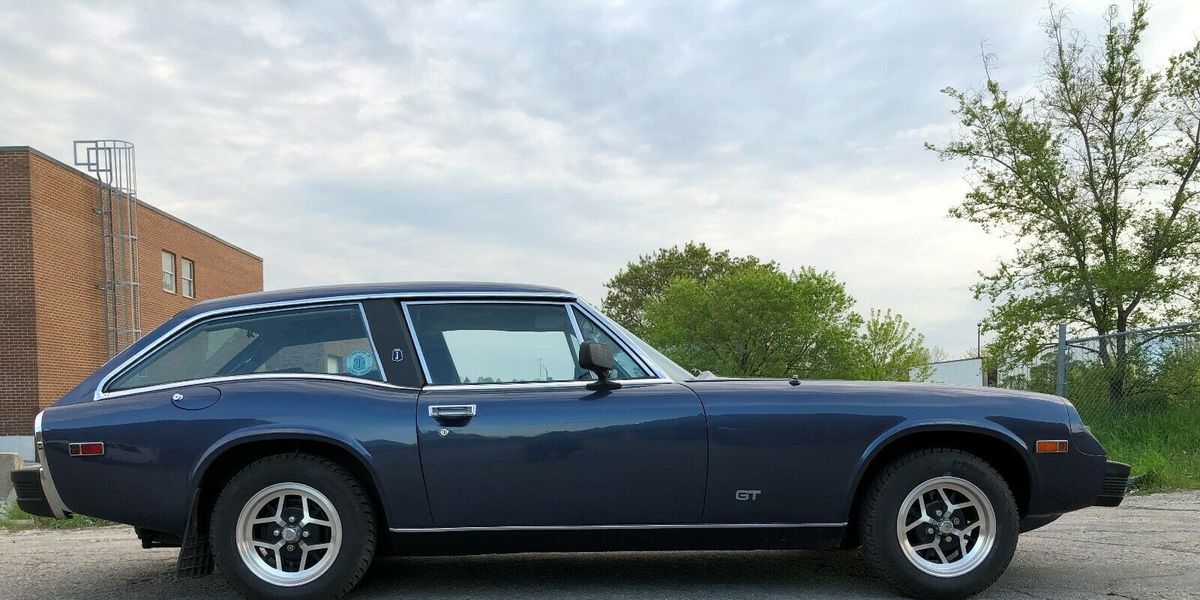 Jensen GT
During its short production run from September 1975 until May 1976, 511 Jensen GTs were built before Jensen Motors went into receivership.
Jensen GT
During its short production run from September 1975 until May 1976, 511 Jensen GTs were built before Jensen Motors went into receivership.